Astronomy Star Project
Hello Mrs Howard!!!
This is my Star Project for physics
I hope you enjoy it!
The music is completely optional but felt it added a nice touch!
I also just really like the song so i may be biasHOW TO USE WEBSITE:
To see each part that was required, click one of the buttons that are labeled with that section below. Once done looking at that section, theres a button labeled "back" and once you click it it'll return you to here!
Information of Star
Which Star Did I Choose?
For this project I chose to do Eta Carinae because I felt like it looked really cool honestly. I honestly just looked up cool star and picked oneDistance from the Sun:
7,500 Light YearsWhere is it located?:
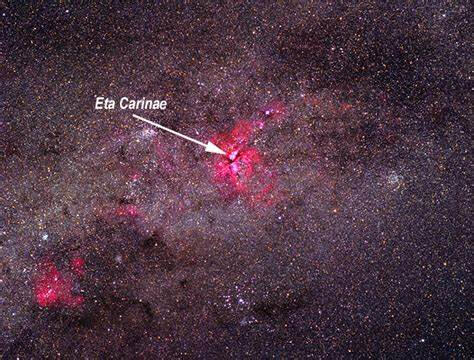
Eta Carinae is located in the Constellation CarinaHow to find it in night sky:
Trying to locate this star in the night sky can be quite an endeavor but it's possible.
Eta Carinae is best viewed from the southern hemisphere, but you can see it in Florida during the winter months in the southern hemisphere (June - August)
When outside, try to find a location with little to no city lights and any sort of light pollution, rural and parks are best.
When locating this star, try looking south since this is a southern constellation. The brighter stars in this constellation form a shape distantive of a keel of a ship.
it's best to use binoculars or a telescope to find this star. While it is technically visible to the naked eye, you will have an easier time locating it.Other names:
Eta Argus
η Car
tiānshè (heaven's altar)
NGC 3372Absolute and Apparent Magnitudes:
Absolute Magnitude Definition: Absolute Magnitude measures what the brightness of the star would be if it was placed at the standard distance of 10 parsecs from earth.
Apparent Magnitude Definition: Apparent Magnitude measures how bright the star appears to observers on Earth.Absolute: 4th magnitude
Apparent: -1.0 - 7.6
The Story
Myths:
Some myths of this star is that when it explodes it'll cause a global mass extinction. Many astrophysicists have said that this is unlikely to happen due to the mass of the star only being about 30 times more than the sun. This would result in the star simply not being able to form a supernova.History: Eta Carinae was first recorded as a fourth-magnitude star in either the 16th or 17th century. During the 19th century Eta Carinae experienced what was named as the "Great Eruption"
During this eruption, it became the brightest star in the sky for a period of time
Classification
Specific Spectra of Eta Carinae
Eta Carinae shows a very diverse array of features, which shows to include hydrogen and helium emission lines, forbidden lines from ionized oxygen and nitrogen, and also P Cygni profiles that have indicated a powerful stellar wind.
The presence of broad emission lines has shown high-velocity outflows, while variability in line strengths and shapes has reflected ongoing instabilities within the star system itself. These characteristics have provided quite valuable insights into the dynamics of massive stellar evolution and the surrounding nebulas as well.Compare and Contrast with the Sun
Alike: Both of these stars are shown to exhibit hydrogen absorption and also emission lines
Different: Eta Carinae is currently at the end of its life cycle as a massive star while The Sun is currently in a stable phase of its life cycle
H-R Diagram
Where does Eta Carinae fit on the H-R diagram?:
On the H-R diagram, Eta Carinae fits in the category of hot stars, very luminous, and is often classified as a luminous blue variable (LBV) or potentially a hypergiantCompare and Contrast with the Sun:
Alike: Both stars are apart of the H-R Diagram
Different: The Sun is positioned as a main sequence star since it has a moderate level of luminosity and temperature. Eta Carinae has high levels of luminosity and very hot temperatures and is also potentially either a LBV or hypergiant.Lifetime and Size:
Lifetime: Eta Carinae is currently in a very unstable phase of its life. This is judged by the eruptions and violent outbursts. Its expected that it only has a few million years left in it's lifetime.Size: Eta Carinae is a very large star and is estimated to be around 250 times the size of the sun. It's been hard to correctly get the size of Eta Carinae due to the dense nebula that surrounds it but its very obviously larger than majority of the stars.
Lifetime
Lifespan of Eta Carinae:
Eta Carinae's lifespan is quite short, just like all the other massive stars.Compare and Contrast with the Sun:
Alike: Both stars have finite lifespan and eventually will end up dying out.
Different: The Sun has a longer lifespan because it's smaller than Eta Carinae so it burns less fuel.How old is Eta Carinae?:
Eta Carinae's age hasn't be 100% confirmed but it is believed to be somewhere around a few million to perhaps even like tens of millions of years old.Compare and Contrast with the Sun:
Alike: Both the Sun and Eta Carinae are in the middle to late stages of their life.
Different: The Sun is much older than Eta Carinae with it being 4.6 billion years old. However, the Sun will outlive Eta Carinae most likely.
Possibility of Life
How would you communicate?:
I feel like the best way to communicate would be through some sort of signal or advanced telescopes. Due to the distance of the planet and Eta Carinae, these communication attempts would require alot of patience i'd imagine.Civilization:
For civilization, we would want to be perceived as peaceful and cooperative. We probably would also be taken for being very curious and willing to learn more about the star.
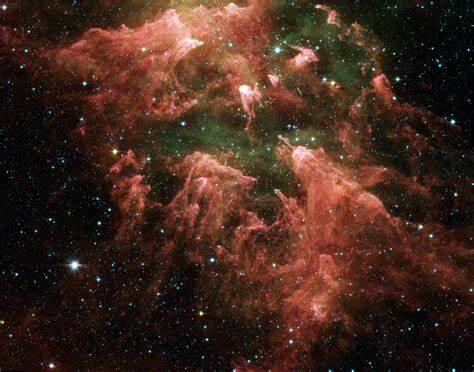
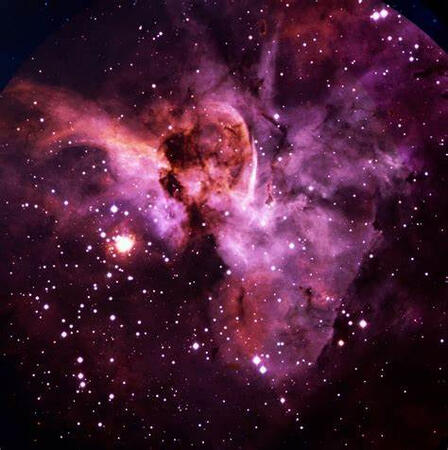
Pictures of Eta Carinae

Sources